

Build better soil by turning kitchen scraps and yard waste into mature compost inside a Geobin backyard composter. Start with balanced greens and browns, maintain moisture and airflow, then cure the finished compost before mixing it into garden soil. The opportunity is substantial because only about 5% of U.S. wasted food gets composted. Food also represents roughly 24.1% of municipal solid waste sent to landfills. Composting redirects useful organic matter toward healthier soil instead. More importantly, finished compost improves structure, moisture retention, nutrient cycling, and biological activity. A Geobin makes this process practical for homeowners who want a simple, expandable backyard system.
Key Takeaways
- Choose a well-drained location with convenient year-round access.
- Balance nitrogen-rich greens with carbon-rich browns throughout the pile.
- Keep compost damp like a wrung-out sponge, not saturated.
- Turn or aerate the material whenever airflow declines.
- Allow compost to mature before applying it around plants.
- Blend finished compost into soil instead of treating it as ordinary fertilizer.
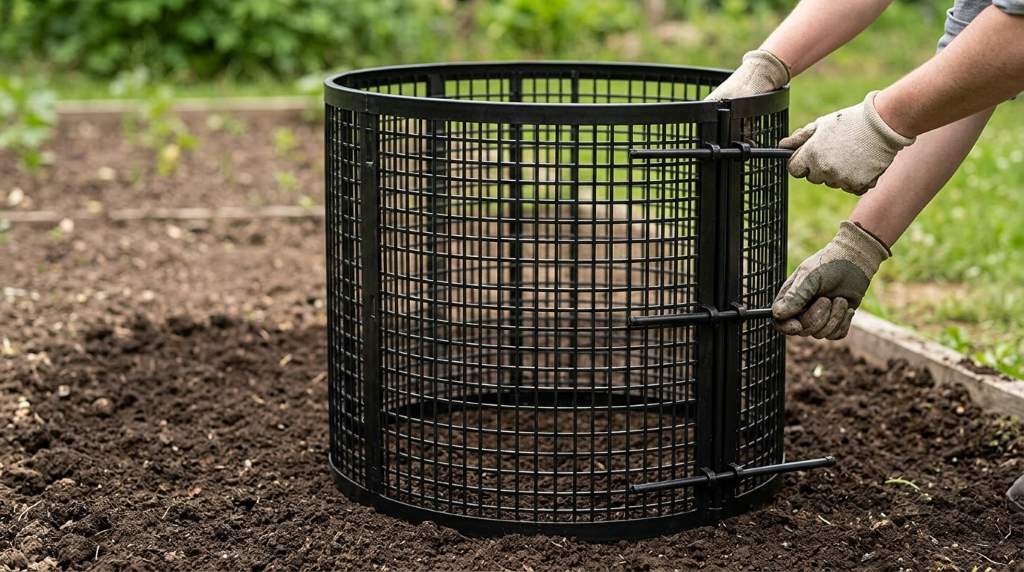
Start With the Soil You Want to Create
Good composting starts with a clear soil-building goal. You might want better drainage, stronger moisture retention, richer garden beds, or improved soil structure.
Therefore, inspect your existing soil before filling the compost bin. Notice whether it feels compacted, dries quickly, stays wet, or lacks visible organic matter.
Compost can address several of these problems simultaneously. It adds organic matter while supporting beneficial organisms that help soil function as a living system.
Think Beyond Fertilizer
Finished compost does more than supply nutrients. It changes how soil holds water, exchanges air, supports roots, and cycles nutrients.
For example, compacted soil often struggles with infiltration and root development. Adding mature compost can improve aggregation and create more useful pore space.
However, compost should not replace every soil amendment automatically. Your soil texture, plant selection, existing fertility, and local conditions should guide your approach.
Choose the Right Location for Your Geobin
Place the Geobin on reasonably level ground with good drainage. Keep the location accessible because regular attention produces better compost.
Also, avoid placing the bin directly against a fence or structure. Leave enough working space around it for adding materials and managing the pile.
A nearby water source helps during dry periods. Nevertheless, you should avoid locations where standing water regularly collects after rain.
Sun or Shade?
Either sun or shade can support backyard composting. However, sunlight can increase drying, especially during hot summer weather.
A partly shaded location often makes moisture management easier. Regardless of exposure, check the pile regularly instead of relying on location alone.
Build the Pile With a Deliberate Recipe
Successful composting depends on balancing carbon-rich browns with nitrogen-rich greens. Microorganisms need both materials to break organic matter down efficiently.
Browns generally provide carbon and physical structure. Greens provide nitrogen and moisture that support microbial activity.
| Material Group | Examples | Purpose |
|---|---|---|
| Browns | Dry leaves, shredded cardboard, small twigs | Carbon, structure, airflow |
| Greens | Vegetable scraps, fruit scraps, fresh grass | Nitrogen, moisture, microbial activity |
| Moisture | Water from rain or careful watering | Supports decomposition |
| Air | Open structure and turning | Supports aerobic decomposition |
Rather than obsessing over a perfect ratio, watch how the pile behaves. A balanced pile should remain moist while retaining enough structure for airflow.
If the pile smells sour or rotten, add more dry browns and improve aeration. If decomposition stalls while the material looks dry, add moisture gradually.
What to Put Into the Geobin
Use a diverse mixture of appropriate household and yard materials. Smaller pieces generally break down faster because microorganisms gain more surface area.
- Fruit and vegetable scraps
- Coffee grounds and unbleached filters
- Fresh grass clippings in moderate amounts
- Dry leaves
- Shredded plain cardboard
- Small plant trimmings
- Untreated paper products
- Small twigs and other woody yard materials
Mix fresh kitchen scraps with dry carbon materials rather than creating thick food layers. This approach reduces odors and helps maintain a porous structure.
Cut large scraps into smaller pieces when practical. Consequently, microorganisms can process the material more efficiently throughout the pile.
Materials to Leave Out
Some materials create odor, pest, contamination, or decomposition problems in typical backyard systems. Keep problematic materials outside the Geobin unless your local guidance specifically permits them.
- Meat and fish scraps
- Dairy products
- Pet waste
- Diseased plants
- Weed seeds that may survive the process
- Coal or charcoal ash
- Glossy or chemically treated materials
- Plastic, metal, glass, and synthetic packaging
Additionally, avoid composting materials treated with persistent chemicals unless you understand their composting implications. When uncertain, choose clean and familiar organic inputs.
Layer Materials Without Creating a Complicated System
You do not need a laboratory-style compost recipe to build useful compost. Instead, alternate moist nitrogen-rich material with dry carbon-rich material.
Start with coarse browns near the bottom to encourage airflow. Then add greens and cover them with a generous layer of browns.
Continue repeating this pattern as new materials become available. Keep the pile loose enough for oxygen to move through its interior.
Why Browns Matter More Than Beginners Expect
Many backyard compost piles contain too many food scraps and too few dry materials. That imbalance commonly produces wet, dense, unpleasant-smelling compost.
Dry leaves solve several problems at once. They add carbon, absorb excess moisture, and create spaces that allow air to circulate.
Therefore, keep a reserve of dry leaves or shredded cardboard near the Geobin. That supply becomes especially valuable when kitchen scraps increase during busy weeks.
Control Moisture Like a Compost Manager
Moisture strongly influences decomposition speed and odor. Compost microorganisms need water, but excessive moisture can fill air spaces.
A useful target resembles a wrung-out sponge. The material should feel damp without releasing water when you squeeze it.
If the pile feels dry and decomposition slows, sprinkle water across several layers. Then mix the material so moisture spreads rather than pooling in one area.
If the pile feels soggy, stop watering temporarily. Add dry browns and turn the material to restore airflow.
Keep Oxygen Moving Through the Pile
Aerobic microorganisms perform best when the compost contains sufficient oxygen. Dense, wet material restricts airflow and can create unpleasant anaerobic conditions.
Turn the pile periodically when the center becomes compacted. You can also loosen dense sections while adding new materials.
However, avoid turning unnecessarily every day. Excessive disturbance can dry the pile and make moisture management harder.
Signs Your Compost Needs More Air
- The pile smells rotten or strongly sour.
- Wet scraps form dense clumps.
- The center stays excessively wet.
- Decomposition appears unusually slow.
- The material collapses into a compact mass.
When these signs appear, add coarse browns and mix thoroughly. Usually, better structure solves the problem more effectively than adding more water.
Use Temperature as a Clue, Not an Obsession
Active compost can become warm because microorganisms release heat while processing organic materials. A warm center generally indicates active biological decomposition.
However, backyard compost does not need to maintain a specific temperature constantly. Focus first on balanced materials, moisture, particle size, and airflow.
If the pile becomes warm and then cools, continue adding appropriate materials when available. A cooling pile does not automatically mean the composting process has failed.
Manage the Geobin Through Changing Seasons
Composting behavior changes with weather, moisture, and available organic materials. Seasonal adjustments therefore make the system more reliable.
Spring and Summer
Fresh grass and garden trimmings can add substantial nitrogen and moisture. Balance them with dry leaves, shredded cardboard, or other carbon-rich material.
Hot weather can also dry exposed compost quickly. Check moisture more frequently and protect the pile from excessive drying when necessary.
Fall and Winter
Fall provides an excellent supply of dry leaves for carbon-rich composting. Shred or crush leaves when possible to improve contact and decomposition.
During colder weather, decomposition usually slows. Continue adding balanced materials, but expect the finished compost to take longer.
Know When Your Compost Is Ready
Finished compost looks and smells very different from the original ingredients. It should appear dark, crumbly, and relatively uniform.
A mature batch usually has an earthy smell rather than a strong food or grass odor. Most recognizable scraps should have disappeared or become difficult to identify.
Do not rush immature compost into sensitive planting areas. Unfinished material can compete for available nitrogen while continuing to decompose.
Use a Simple Maturity Checklist
- Dark brown to nearly black appearance
- Crumbly, soil-like texture
- Earthy smell instead of strong odors
- Few recognizable food scraps
- No obvious heating from active decomposition
- Material feels stable after resting
When the compost meets these signs, let it cure further if practical. Extra curing creates a more stable amendment for garden soil.
Turn Finished Compost Into Better Soil
Once the compost matures, apply it according to the needs of the soil and plants. More compost does not automatically mean better results.
For garden beds, incorporate a moderate layer into the existing topsoil. Mix it thoroughly rather than creating a thick compost-only planting layer.
For established plants, use compost as a surface amendment around the root zone. Keep a small gap around stems to reduce moisture-related problems.
Match the Application to the Soil Problem
| Soil Problem | Useful Compost Strategy | Primary Goal |
|---|---|---|
| Compaction | Blend mature compost into the upper soil layer | Improve structure and pore space |
| Fast drainage | Add compost consistently over time | Improve moisture retention |
| Low organic matter | Use finished compost as a recurring amendment | Increase organic matter |
| Weak garden performance | Combine compost with appropriate soil testing | Improve nutrient cycling |
Importantly, compost works best as part of a broader soil-management strategy. Mulching, reducing unnecessary tillage, protecting soil, and choosing suitable plants also matter.
Build Soil Quality Through Repetition
The biggest advantage of a backyard composter appears over time. One batch can improve a garden, but repeated applications can build a sustainable soil-building cycle.
Kitchen scraps become compost, compost feeds soil, and healthy soil supports productive plants. Garden residues can then return to the compost system.
This cycle reduces dependence on purchased amendments while keeping useful organic matter within your property. It also turns routine household waste into a practical gardening resource.
Common Geobin Composting Mistakes to Avoid
Most composting problems come from simple management errors rather than complicated technical failures. Fortunately, you can correct many issues quickly.
- Too many greens: Add dry browns and improve airflow.
- Too many browns: Add moist green materials gradually.
- Too much water: Mix in dry carbon materials.
- Too little water: Moisten the pile gradually.
- Large chunks: Chop or shred materials before adding them.
- Strong odor: Increase browns and aerate the pile.
- No visible activity: Check moisture, balance, and particle size.
Do not respond to every problem by adding more food scraps. First identify whether moisture, oxygen, carbon, or nitrogen limits the process.
A Practical Weekly Geobin Routine
A simple routine keeps composting manageable even when gardening becomes busy. Spend a few minutes checking the pile whenever you add fresh material.
- Add kitchen scraps and cover them with browns.
- Check whether the pile feels damp but not saturated.
- Loosen compacted sections when airflow declines.
- Keep dry leaves or cardboard available nearby.
- Watch for unusual odors or excessive moisture.
- Allow older material to finish and cure before using it.
Consistency matters more than constant intervention. A well-managed compost pile should gradually become easier to maintain.
How Compost Improves Long-Term Soil Performance
Compost contributes organic matter that supports better soil structure and biological activity. It can also help soil retain water while improving infiltration.
That combination becomes especially valuable during periods of heavy rain or dry weather. Better soil structure allows roots to access both air and moisture more effectively.
Compost also releases nutrients gradually instead of behaving exactly like a fast-acting synthetic fertilizer. Therefore, treat it as a soil amendment first and a fertilizer source second.
When to Use Soil Testing With Compost
Soil testing becomes valuable when plants repeatedly struggle despite reasonable compost management. Testing can reveal nutrient imbalances or pH conditions that compost alone cannot correct.
Use test results to guide additional amendments rather than guessing. This approach prevents unnecessary applications and keeps your soil-management plan more precise.
Likewise, avoid assuming every poor plant result comes from poor soil. Watering, sunlight, pests, disease, temperature, and plant selection can create similar symptoms.
Frequently Asked Questions
Can a Geobin build usable compost for garden soil?
Yes, a properly managed Geobin can produce mature compost suitable for improving garden soil.
How long does compost take in a Geobin?
Composting time varies with materials, moisture, temperature, particle size, and management conditions.
Should I put compost directly around plants?
Yes, you can top-dress established plants with mature compost while keeping it away from plant stems.
Why does my Geobin compost smell bad?
Bad odors usually indicate excess moisture, poor airflow, or an imbalance toward nitrogen-rich materials.
Can compost replace garden soil completely?
No, finished compost works best as an amendment mixed with existing soil rather than as a complete soil replacement.
Build Better Soil One Batch at a Time
Building soil with a Geobin starts with balanced ingredients and continues through careful moisture and airflow management. The process becomes much easier when you treat compost as a living system rather than a waste container.
Start with clean organic materials, keep browns available, monitor moisture, and aerate when necessary. Then give finished compost enough time to mature before incorporating it into your garden.
Most importantly, keep the cycle going throughout the year. With consistent composting, your kitchen and yard waste can become a long-term resource for healthier, more resilient soil.
