

Hang solar garden torch lights from sturdy, weather-safe supports that receive strong daytime sunlight. Keep them away from dry vegetation, heat sources, walkways, overhead hazards, and unstable branches. Most outdoor solar torches need roughly 6 to 8 hours of direct sunlight for reliable nighttime performance. Proper placement also prevents falling fixtures, blocked sensors, glare, and unnecessary battery drain. Solar Garden Torch Lights can create inviting outdoor accents when positioned thoughtfully. However, attractive placement should never compromise structural stability or safe movement.
Key Takeaways
- Hang torches from strong, weather-resistant supports that can handle outdoor conditions.
- Choose locations where solar panels receive several hours of unobstructed daylight.
- Keep lights away from dry leaves, fabrics, open flames, and other combustible materials.
- Maintain enough clearance from paths, doors, branches, and frequently used outdoor areas.
- Test the hanging position before permanently installing brackets, hooks, or mounts.
- Use decorative torches for ambiance rather than relying on them for critical task lighting.
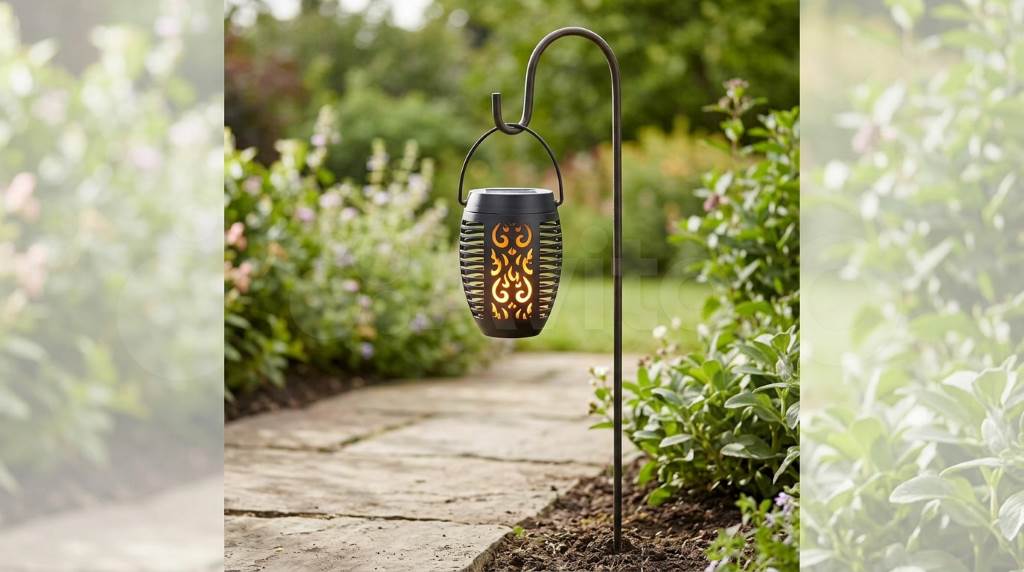
Start With the Support, Not the Light
The safest hanging location begins with a reliable structure rather than an attractive visual angle. A torch should remain firmly attached during rain, wind, temperature changes, and normal outdoor movement.
Suitable supports include sturdy pergolas, reinforced fence posts, masonry walls, solid deck structures, and purpose-built garden hooks. Avoid thin branches, loose trellis panels, decorative vines, lightweight rails, and unstable garden structures.
Check the Support Before Hanging
First, inspect the support for cracks, rot, rust, loosened fasteners, or structural movement. Then apply gentle downward and sideways pressure before attaching the torch.
If the support moves noticeably, choose another location or reinforce the structure first. A lightweight solar fixture can still become dangerous when it falls from overhead.
Best Places to Hang Solar Garden Torches
The best locations combine reliable sunlight, stable mounting, clear movement, and attractive nighttime visibility. Several garden zones naturally provide these conditions without requiring complicated installation.
1. Pergolas and Covered Patio Edges
Pergolas provide excellent mounting opportunities because their posts and beams offer dependable structural support. Position the torch near an outer edge instead of directly above seating areas.
This arrangement creates a warm perimeter glow without placing the fixture above people’s heads. However, check the roof design carefully because excessive shade can reduce charging performance.
2. Fence Posts
Strong fence posts can provide convenient mounting points for solar torches along garden boundaries. Choose posts that remain stable when pushed or pulled lightly.
Keep the torch facing outward or toward the garden rather than directly into neighboring windows. Also, leave enough clearance so people cannot strike the fixture while walking.
3. Garden Gates and Entry Areas
Gate areas benefit from decorative lighting because visitors naturally notice these transition points after sunset. Mount torches beside the gate rather than directly above moving hardware.
Keep the fixture clear of swinging gates, latches, handles, and frequently used pathways. Additionally, avoid positioning bright panels where they shine directly into approaching eyes.
4. Deck and Patio Perimeters
Deck railings and patio structures can support torches when their construction provides adequate strength. Mount fixtures toward the outer perimeter to protect seating and walking space.
Never let a hanging torch become an obstacle near stairs or narrow passages. Leave generous clearance around handrails because people depend on these surfaces for balance.
5. Garden Arbors
Arbors can create attractive focal points for hanging solar torches. Nevertheless, confirm that the arbor uses solid posts and secure joints before adding fixtures.
Place lights beside the opening rather than directly over the walkway. This positioning preserves head clearance while creating a welcoming entrance effect.
Where You Should Not Hang Them
Some locations appear visually perfect but create avoidable safety or performance problems. Avoiding these areas often matters more than finding the prettiest installation point.
- Do not hang torches above seating where fixtures could fall onto people.
- Avoid dry vines, straw, dead leaves, paper decorations, and other combustible materials.
- Keep lights away from grills, fire pits, outdoor heaters, candles, and open flames.
- Do not attach fixtures to weak branches or decorative structures that sway heavily.
- Avoid locations directly above stairs, narrow paths, or frequently used entrances.
- Keep solar panels away from persistent shade created by roofs, walls, or dense foliage.
- Do not place lights where sprinklers continuously spray the fixture unless rated accordingly.
- Avoid positions where children or pets can easily pull down the hanging fixture.
Protect the Solar Panel From Shade
Hanging the light safely does not guarantee that it will perform effectively. The solar panel still needs a clear view of the daytime sky.
Observe your chosen location throughout the day before installing the mounting hardware. Morning sunlight may disappear behind a building or tree during important charging hours.
Watch Seasonal Shade Changes
Sun angles change throughout the year, which can alter how much light reaches the panel. A location that works during summer may perform poorly during another season.
Therefore, examine nearby trees, rooflines, fences, and walls before committing to permanent installation. Trimmed branches can also grow back and gradually block the panel.
Maintain Safe Hanging Height
Hanging height should provide visibility without creating an overhead obstruction. The ideal position depends on the fixture design, mounting method, and surrounding space.
For busy walkways, keep the lowest part of the fixture comfortably above head level. Around open garden borders, you can use a lower decorative position when nobody passes underneath.
Never judge clearance only from the installer’s height. Consider children, taller adults, raised umbrellas, gardening tools, and furniture movement around the installation.
Keep a Safe Distance From Combustible Materials
Solar torches usually use LEDs rather than real flames, but their housings can still become warm. More importantly, damaged batteries or electrical components can create unusual heat.
Keep fixtures away from dry foliage, fabric decorations, paper lanterns, and accumulated garden debris. Regularly remove leaves that collect around the light or mounting area.
Also, follow the manufacturer’s clearance instructions when they provide specific spacing requirements. Product construction, battery design, and weather ratings vary between models.
Choose the Right Mounting Method
Different structures require different attachment methods, so avoid improvising with weak hooks or temporary fasteners. The mounting system should match both the fixture weight and support material.
| Mounting Location | Recommended Approach | Main Safety Check |
|---|---|---|
| Wooden post | Outdoor-rated screw hook or bracket | Check for solid, undamaged wood |
| Masonry wall | Suitable wall anchor and bracket | Match hardware to masonry type |
| Pergola beam | Weather-resistant hook or bracket | Verify beam strength |
| Fence panel | Mount to structural post | Avoid thin decorative panels |
| Tree branch | Generally avoid permanent mounting | Branches move and grow |
Use corrosion-resistant outdoor hardware when the fixture remains exposed to rain. Stainless steel or appropriately coated hardware generally performs better outdoors than unsuitable indoor fasteners.
Account for Wind Before Installation
Wind creates additional force whenever a hanging torch swings or catches moving air. Larger flame-shaped housings can behave like small sails during strong gusts.
Choose protected locations that still receive sufficient sunlight. Avoid exposed corners where repeated swinging could loosen hooks, damage brackets, or strike nearby surfaces.
After windy weather, inspect the fixture and mounting hardware for movement. Tighten loose hardware and replace damaged components before using the light again.
Keep Light Away From Electrical and Overhead Hazards
Outdoor gardens often contain electrical cables, utility lines, irrigation systems, and other hidden hazards. Never attach a hanging fixture near overhead electrical conductors.
Also, consider tree branches that could fall during storms. A seemingly safe location can become hazardous when branches break or heavy debris reaches the fixture.
If installation requires drilling near electrical wiring, plumbing, or hidden services, stop and verify the location first. Never guess where concealed infrastructure runs behind walls or structures.
Prevent Glare and Sensor Problems
Solar torch placement affects more than appearance because nearby artificial light can interfere with automatic operation. Streetlights, porch fixtures, security lights, and neighboring lamps can confuse light sensors.
Position the solar panel away from strong nighttime light sources whenever possible. Then check the torch after sunset to confirm that it activates consistently.
Also, angle the visible light away from windows and direct eye level. A softer, indirect glow usually creates a more comfortable garden atmosphere.
Use Torches for Ambiance, Not Critical Illumination
Decorative solar torches create atmosphere, but many models provide limited illumination. Their flickering LED effect often emphasizes scenery rather than clearly lighting walking surfaces.
For stairs, uneven paths, ramps, and other hazards, use lighting designed for functional visibility. Combining decorative torches with suitable pathway lighting provides a safer overall layout.
Think in Lighting Layers
Start with functional lighting around hazards and movement routes. Next, add solar torches around borders, entrances, seating zones, and landscape features.
This layered approach prevents decorative fixtures from carrying responsibilities they cannot reliably handle. It also creates better depth without making the garden excessively bright.
Test the Location Before Permanent Installation
Temporary testing can prevent expensive repositioning later. Hang or mount the torch temporarily and observe its performance during both daylight and nighttime.
During daylight, check panel exposure and structural stability. After dark, examine glare, shadows, visibility, and whether the light reaches the intended area.
Then walk around the garden as a visitor would. This simple test often reveals awkward glare, low branches, blocked routes, or poor illumination.
Maintain Hanging Solar Torches Safely
Outdoor fixtures need occasional inspection even when they require no electrical wiring. Regular checks help identify loose mounts, damaged housings, dirty panels, and deteriorating hardware.
- Clean solar panels regularly with a soft, non-abrasive cloth.
- Inspect brackets, hooks, screws, and mounting points for corrosion.
- Check the fixture after severe storms or unusually strong winds.
- Remove leaves, twigs, and other debris around the fixture.
- Replace damaged housings instead of continuing to use compromised units.
- Follow the manufacturer’s battery replacement and disposal instructions.
Never modify sealed electrical components unless the manufacturer specifically permits servicing. Stop using a fixture that shows swelling, cracking, overheating, smoke, or unusual electrical behavior.
A Simple Placement Checklist
Before finalizing your installation, review the location using a practical safety checklist. This process takes only a few minutes but can prevent common placement mistakes.
- Confirm that the support remains stable under gentle pressure.
- Check that the solar panel receives strong, unobstructed daylight.
- Verify that people cannot strike the fixture while walking.
- Move the light away from combustible materials and heat sources.
- Check clearance from branches, cables, doors, and moving structures.
- Confirm that nearby artificial lighting does not confuse the sensor.
- Test the light after sunset before completing the installation.
- Inspect the mounting hardware again after the first significant storm.
Final Verdict
The safest place to hang a solar garden torch is a sturdy outdoor support with clear sunlight and generous clearance. Pergolas, strong posts, garden arbors, and reinforced patio structures usually offer better options than branches or weak decorative panels.
Prioritize stability, sunlight, clearance, weather exposure, and safe movement before considering visual symmetry. Once those fundamentals work, adjust the torch position to create the atmosphere you want.
Walk your garden during daylight and after dark, test each proposed position, and correct hazards before permanent mounting. That simple approach can deliver attractive lighting while keeping your outdoor space safer and easier to enjoy.
Frequently Asked Questions
Can solar garden torches hang from tree branches?
It is usually safer to avoid branches because wind movement, growth, and breakage can destabilize hanging fixtures.
How high should a hanging solar torch be?
Place it high enough to avoid head strikes while maintaining the manufacturer’s recommended mounting position and clearance.
Can solar torches hang under a pergola?
Yes, provided the structure stays stable and the solar panel receives enough unobstructed daylight for charging.
Should solar torches hang near a fire pit?
No, keep them away from fire, excessive heat, sparks, and combustible decorations around fire features.
Can solar torches replace pathway lighting?
Usually not, because many decorative torches provide ambiance rather than dependable illumination for walking hazards.
