

Imagine stepping into your garden on a sunny summer morning, surrounded by lush, healthy tomato plants heavy with vibrant red fruits. But what if your plants are tangled, disease-prone, or producing fewer tomatoes than expected? The secret to transforming your tomato patch into a productive paradise often lies in one simple yet powerful technique: pruning. If you’ve ever wondered “how to prune tomato plants” to boost yield and plant health, you’re in the right place. In this comprehensive guide, we’ll dive deep into the process, covering everything from basic techniques to advanced tips for different varieties. Whether you’re a beginner gardener or a seasoned green thumb, pruning can make all the difference in achieving maximum fruit production and preventing common pitfalls.
Pruning tomato plants isn’t just about snipping away excess growth—it’s about directing the plant’s energy toward what matters most: developing flavorful, abundant tomatoes. By removing unnecessary leaves and stems, you improve airflow, reduce disease risk, and encourage stronger, more fruitful vines. Let’s explore how to do it right, drawing on proven methods that align with expert advice from gardening communities and horticultural resources.
Understanding Tomato Plant Types: Determinate vs. Indeterminate
Before you grab your shears, it’s crucial to know your tomato variety, as this dictates your pruning approach. Tomato plants fall into two main categories: determinate and indeterminate.
Determinate tomato plants, like many Roma or bush varieties, grow to a fixed height (usually 3-4 feet) and set all their fruit at once. They’re compact and ideal for containers or small spaces. For these, pruning is minimal—focus on removing suckers below the first flower cluster to avoid stressing the plant. Over-pruning can reduce yield since these plants have a predetermined fruit set.
Indeterminate tomato plants, such as cherry, beefsteak, or heirloom types like San Marzano, keep growing and producing fruit throughout the season until frost hits. They can reach 6-10 feet or more if unsupported. These benefit greatly from regular pruning to manage their vigorous growth. Questions like “how to prune indeterminate tomato plants” often arise because aggressive trimming helps channel energy into fruit rather than endless vines.
Hybrid varieties, like Celebrity or Better Boy, may lean toward one type, so check your seed packet or plant tag. Knowing this helps tailor your strategy, whether you’re dealing with potted plants, greenhouse setups, or outdoor gardens.
Why Prune Tomato Plants? The Benefits Explained
You might ask, “Should you prune tomato plants?” or “Should I trim my tomato plants?” The answer is a resounding yes for most gardeners, especially if you’re aiming for quality over quantity in foliage.
Pruning enhances airflow, which minimizes fungal diseases like blight that thrive in humid, crowded conditions. It also exposes more fruit to sunlight, improving ripening and flavor. Studies from agricultural extensions show that properly pruned plants can yield 20-30% more fruit by redirecting nutrients from leaves to tomatoes.
For those growing in limited spaces, pruning keeps plants manageable—think “how to prune tomato plants in pots” or containers to prevent them from becoming leggy or overgrown. It also makes harvesting easier and reduces pest hiding spots. However, if your plants are already stressed (e.g., from drought or poor soil), hold off on heavy pruning to avoid shocking them.
When and How Often to Prune Tomato Plants
Timing is everything. Start pruning when plants are young, about 1-2 feet tall, and continue throughout the growing season. The best time is early morning when plants are turgid and cuts heal quickly. Avoid pruning in wet weather to prevent disease spread.
For “how and when to prune tomato plants,” begin by removing bottom leaves touching the soil once plants are established—this prevents soil-borne pathogens. Prune suckers (those small shoots in leaf axils) weekly during peak growth. As plants mature, focus on maintaining 1-3 main stems for indeterminate types.
How often? Check plants every 5-7 days in summer. For determinate varieties, prune lightly once or twice. Stop heavy pruning 4-6 weeks before your first frost to allow existing fruit to ripen.
Tools You’ll Need for Effective Pruning
Gather these essentials for clean, safe cuts:
- Sharp pruning shears or scissors (disinfect with alcohol between plants).
- Gloves to protect against sap and thorns.
- Optional: Stakes, cages, or trellises for support post-pruning.
Clean tools prevent disease transmission, ensuring your efforts don’t backfire.
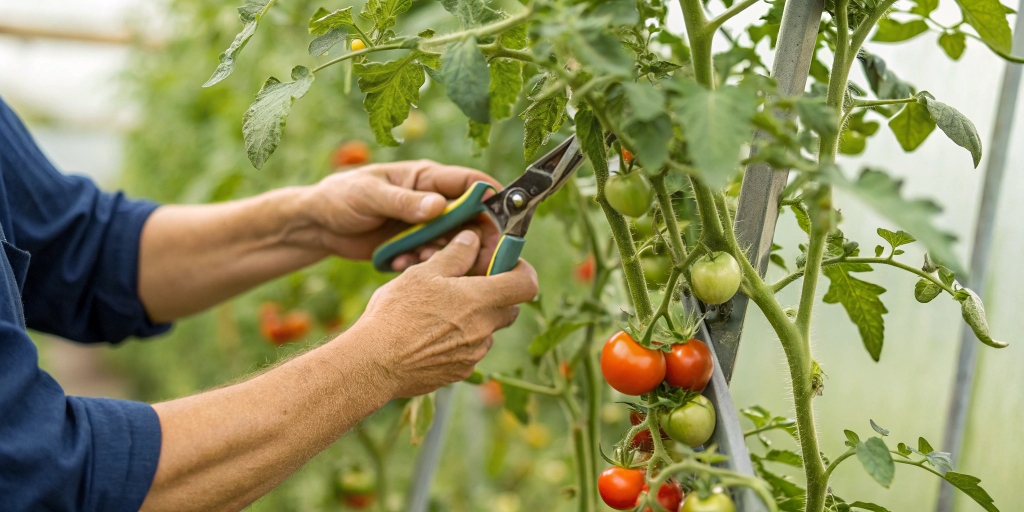
Step-by-Step Guide: How to Prune Tomato Plants
Let’s break down “how to prune tomato plants” into actionable steps. This method works for most varieties, with adjustments for specifics.
- Inspect the Plant: Look for suckers—these are the shoots emerging between the main stem and leaves. Also, spot yellowing or diseased leaves.
- Remove Bottom Leaves: Using shears, cut off leaves within 6-12 inches of the ground. This improves airflow and reduces splash-back from watering.
- Pinch Out Suckers: For indeterminate plants, pinch small suckers (under 2 inches) with your fingers for a clean break. Larger ones require shears. Aim to keep 1-2 main vines; remove others to focus energy.
- Trim Overgrown or Crossing Branches: Cut back branches that rub together or shade fruit clusters. For “how to prune overgrown tomato plants,” start at the top and work down, removing up to 20-30% of foliage at a time.
- Top the Plant (Optional): Late in the season, pinch the growing tip to stop vertical growth and ripen existing fruit. This is key to “how to prune tomato plants for more fruit.”
- Support the Plant: Tie pruned vines to stakes immediately to prevent breakage.
For visual learners, search for “how to prune tomato plants video” on platforms like YouTube—many demonstrate these steps with real plants.
Pruning Specific Varieties and Situations
Different tomatoes need nuanced approaches. For “how to prune cherry tomato plants,” which are often indeterminate, remove suckers aggressively but leave some side shoots for continuous harvest. Cherry types like Sweet 100 or Sungold thrive with 2-3 stems.
Roma tomato plants, typically determinate, require light pruning—focus on airflow without stripping too much. “How to prune Roma tomato plants” often involves just removing suckers below flowers.
For beefsteak or grape varieties, prune to one main stem for larger fruits. If growing in containers, “how to prune tomato plants in pots” means more frequent trimming to keep them compact.
Indoors or in AeroGardens? “How to prune AeroGarden tomato plants” emphasizes gentle pinching to fit the system’s space. For leggy plants, prune back to encourage bushiness.
Always adapt: Young tomato plants need minimal intervention, while mature ones benefit from ongoing maintenance.
Common Mistakes to Avoid When Pruning Tomato Plants
Even experienced gardeners slip up. Don’t prune too much at once—aim for no more than a third of the plant to avoid sunscald on exposed fruit. Never prune wet plants, as this spreads fungi.
Another error: Ignoring variety differences. Pruning determinate plants like indeterminate ones can halve your yield. Also, avoid dull tools that tear stems, inviting infections.
For “how to prune tomato plants for maximum yield,” balance is key—over-pruning starves the plant of photosynthesis power.
Advanced Tips for Maximum Yield and Plant Health
To elevate your game, incorporate these strategies:
- Prune for vertical growth by training vines upward, ideal for small spaces.
- Combine pruning with mulching and fertilization for robust plants.
- For “how to prune tomato plants for best yield,” remove flowers early if plants are weak, focusing energy on fewer, larger fruits.
- Monitor for signs of stress post-pruning, like wilting, and water deeply.
Experiment: Some gardeners swear by Missouri pruning, where suckers are pinched but allowed to grow a few leaves before full removal.
Conclusion: Harvest the Rewards of Proper Pruning
Pruning tomato plants transforms chaotic vines into efficient fruit factories, rewarding you with healthier plants and tastier tomatoes. By following this guide, you’ll address common queries like “how to prune tomato plants for more fruit” and enjoy a bountiful season. Remember, practice makes perfect—start small and observe your plants’ responses.
Ready to give it a try? Head to your garden today, apply these tips, and watch your tomatoes thrive. Share your pruning success stories or questions in the comments below—we’d love to hear how it goes! For more gardening insights, subscribe to our newsletter and never miss a tip.
FAQs
How often should I prune tomato plants?
Prune every 5-7 days during active growth, focusing on suckers and diseased leaves. Reduce frequency as the season ends.
Should I prune determinate tomato plants?
Yes, but lightly. Remove suckers below the first flower cluster and bottom leaves for better airflow, but avoid heavy trimming to preserve yield.
How to prune cherry tomato plants for maximum yield?
Pinch suckers regularly, maintaining 2-3 stems. Remove lower leaves and overcrowded branches to direct energy to fruit production.
What happens if I don’t prune my tomato plants?
Unpruned plants may become bushy, leading to poor airflow, increased disease risk, and smaller, fewer fruits due to divided energy.
How to prune indeterminate tomato plants: video resources?
Look for tutorials on YouTube from channels like Epic Gardening or university extensions—they offer step-by-step visuals for effective pruning.
Can I prune tomato plants in pots differently?
Yes, prune more frequently to keep them compact. Focus on removing suckers and trimming for bushiness, ensuring good support to prevent tipping.
How to properly prune a tomato plant to produce more fruit?
Remove suckers, bottom leaves, and excess foliage to channel nutrients to fruits. Prune young plants for structure and mature plants for maintenance.
Find out more:
