

Gardening isn’t just a relaxing hobby—it’s a rewarding practice that can transform your outdoor space and mental well-being. Whether you’re just starting or have spent years nurturing blooms and vegetables, the right tools can make or break your gardening experience. Here are the 10 must-have garden tools for beginners and experts, handpicked for their effectiveness, durability, and essential role in maintaining a thriving garden.
-
Hand Trowel – The Garden Essential for All
A hand trowel is a gardening staple. It allows for easy digging, planting, and transferring soil or small plants. According to gardening expert Joe Lamp’l, a high-quality trowel should have a sturdy stainless-steel blade and a comfortable grip. The logic is simple: precision in small spaces requires control, and a reliable trowel gives you that.
In a 2023 survey by the National Gardening Association, 76% of gardeners ranked hand trowels among their top-used tools. Opt for ergonomic handles if you plan to garden for long hours to prevent wrist fatigue.
-
Pruning Shears – The Secret to Healthy Plants
Also known as secateurs, pruning shears are indispensable for trimming and shaping plants. Sharp blades ensure clean cuts, reducing the risk of plant disease and encouraging new growth.
Experts recommend bypass pruners over anvil types for most tasks, especially live stems. As per Garden Design Magazine, properly pruned plants produce 25% more blooms and fruit. Professionals and hobbyists alike agree that good pruners are worth the investment.
-
Garden Gloves – Your First Line of Defense
Gardening without gloves can expose your hands to blisters, thorns, and harmful bacteria. Quality garden gloves offer protection while allowing flexibility.
Opt for breathable, water-resistant gloves with reinforced fingertips. In an independent review by The Spruce, nitrile-coated gloves were rated best for durability and comfort. Beginners often underestimate the value of gloves until they’ve faced thorny bushes or itchy skin after handling compost.
-
Spade – For the Heavy-Duty Jobs
A garden spade is essential for digging holes, edging beds, and slicing through tough roots. It’s a workhorse tool every gardener needs.
Look for a steel blade and D-shaped handle for better leverage. A good spade increases efficiency and prevents back strain, especially during deep digging. According to Fine Gardening, a spade with a sharpened blade can reduce digging effort by up to 30%.
-
Garden Fork – Breaking Ground Made Easier
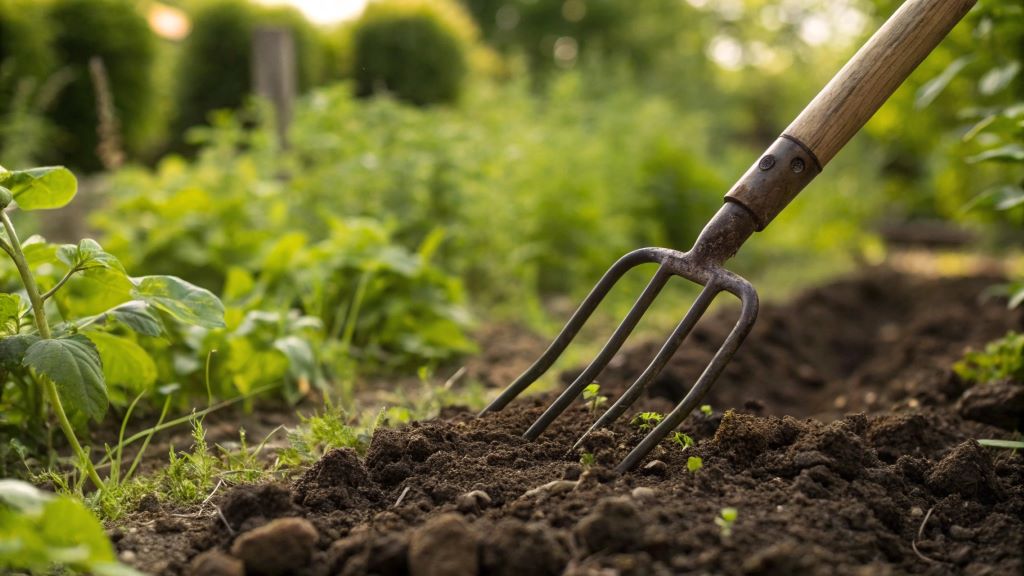
This tool is perfect for turning soil, breaking up clay, and incorporating compost. Its sturdy tines can reach deeper than a spade, making it ideal for aerating compacted soil.
Professional landscapers often use it before planting new beds. A garden fork is particularly helpful in no-dig gardening methods, which have gained popularity due to their soil health benefits.
-
Watering Can – Controlled Hydration
While hoses are efficient for large gardens, watering cans offer precision. They’re perfect for seedlings, container gardens, and indoor plants.
Choose a can with a detachable rose spout for versatile use. According to the Royal Horticultural Society, overwatering is a leading cause of plant failure. A watering can helps you avoid that by delivering just the right amount of water.
-
Wheelbarrow – Carry the Load, Not the Strain
Whether moving compost, mulch, or tools, a wheelbarrow is essential for saving time and energy. For larger gardens, it’s indispensable.
Modern versions come in lightweight, rustproof materials with ergonomic handles. Research by Gardener’s World shows that gardeners using wheelbarrows reduced time spent on repetitive tasks by nearly 40%. It’s a clear case of working smarter, not harder.
-
Hoe – Weed Control Champion
A hoe is perfect for weeding and cultivating soil. It slices weeds just below the surface without disturbing your plants.
There are many types—stirrup hoes, scuffle hoes, and draw hoes. Stirrup hoes are favored by many because they allow a push-pull motion that’s easier on your body. Weeds compete for nutrients; a hoe helps eliminate them efficiently.
-
Rake – More Than Just Leaf Cleanup
Beyond fall cleanup, a garden rake helps level soil, spread mulch, and clear debris. Adjustable steel rakes are more versatile than fixed ones.
A good rake ensures even soil texture, which is crucial for seeding and transplanting. Experts at This Old House recommend rakes with wide heads and cushioned grips to maximize efficiency without tiring your arms.
-
Garden Kneeler – Comfort Meets Practicality
Kneeling repeatedly on hard ground strains knees and backs. A garden kneeler offers support and often doubles as a small seat or tool holder.
Many modern kneelers come with side handles for easy standing. As per Backyard Boss, gardeners who used kneelers reported fewer joint pains and longer, more productive sessions. It’s a tool of comfort that boosts endurance.
FAQs on Garden Tools
- What is the best tool for digging in clay soil?
A garden fork works better than a spade in compacted or clay-heavy soil due to its penetrating tines. - Are expensive tools always better?
Not always. However, tools made from stainless steel and hardwood handles offer better longevity and comfort. - How should I store my garden tools?
Clean tools after use and store them in a dry area. Rust and wear often come from improper storage. - What’s the difference between a spade and a shovel?
A spade has a flat edge for slicing soil, while a shovel has a curved blade for scooping. - Can beginners use professional-grade tools?
Absolutely. Quality tools improve efficiency and reduce physical strain, benefiting users of all skill levels. - How do I know which tools I need first?
Start with a hand trowel, pruning shears, gloves, and a watering can. These handle most beginner tasks. - What’s the best way to keep tools sharp?
Use a sharpening stone or file regularly. Sharp blades cut cleanly and reduce damage to plants.
Final Thought
Choosing the right tools isn’t about having the most—it’s about having the right ones. The 10 must-have garden tools for beginners and experts listed here are more than just metal and wood—they’re an investment in your garden’s success and your personal satisfaction.
Each tool brings a specific function that, when combined, creates a seamless gardening experience. By understanding their roles and using them with purpose, you’ll not only grow healthier plants but also cultivate a deeper love for the craft. Whether you’re planting your first seed or refining a mature landscape, these tools equip you to do it brilliantly.
Read More:
Best Gardening Kneelers and Tool Sets
